

I’m not one for New Year’s resolutions. Though I feel reflective as one year ends and another begins, goal-setting in the depths of winter feels futile to me. I’m just trying to survive until spring, when flowers bloom and birds sing and my vitamin D stores begin to rebound from Ohio winter. But last year, having less to do with the date on the calendar and more with staring down the barrel of a second Trump term I chose a word of the year: uninformed.
Now, I didn’t truly desire to become uninformed, but rather less informed. I was feeling fed up steeping in the constant churn of the information-entertainment hybrid we now call news served up alongside an unending stream of takes and punditry cosplay. My eyes were wide open about just what we were about to endure with a second Trump term and I wanted off the ride.
I no longer trusted algorithms controlled by billionaires.
I no longer wished to be a passive consumer.
I needed to take control of my news and information consumption and create better boundaries.
What I did not recognize at the time, but likely should have, was this was the beginning of my breakup with algorithmically driven social media.
I’ve long had a conflicted relationship with the modern iterations of social media platforms, but at the time I didn’t realize quite how dire and tenuous the relationship had become.
Less than a month later, two weeks after Trump entered office again, I logged out of Instagram to bake sourdough and just never found my way back. I quickly felt the benefits of stepping away and now, it’s as though I’ve developed something of an allergy. Any time I visit the platform, as I do sporadically for specific purposes, I’m immediately overwhelmed, annoyed. Even if I find myself interested in scrolling it ends quickly as I’m served up ads and suggested content rather than seeing things from people I follow.
According to Meta’s own metrics only 7% of users’ time is now spent interacting with friends on Instagram (17% on Facebook).1 While these stats are surprisingly low, even to me, it really shouldn’t be considering how challenging the platforms have made it to interact intentionally with your chosen community. It’s much more beneficial to them to extract our time and attention in other ways.
I now find myself a year into my self-styled exile from algorithmic social media, something of a digital detox veteran, as my friend Kissairis recently labeled me. Each year it seems more and more of us are becoming disillusioned with apps and looking for ways to claw back our time, attention, and perceptions about the world. I think it’s fair to say analog living is something of a trend right now, though I only know about it because it’s being discussed and performed online—the irony. But the sentiment is there!
Trends come and go, though I hope our interest in a better relationship with tech and algorithms is here to stay—I know mine is—even if in something more of a counter-cultural capacity, which is where I think social media ex-pats are destined to reside.
While I don’t have instructions for how everyone can set better intentions and boundaries with social media, I do have experience to share with shifting my news consumption care of my uninformed year.
Previously, much of my news was consumed via social media from traditional news outlets and journalists. One of the problems of social media is we have little control over what we’re exposed to while we scroll. The news is regularly horrifying and it’s really not healthy for us to casually consume it all day long sandwiched between influencers hawking #sponcon and some random Reel the app has decided I need to see. Even if we unfollow news accounts we still see a mashup of things organically because of what we’re served and what is shared—it’s just the nature of the beast.
The lack of ability to decide my own consumption experience is a major reason I stepped away from algorithmically driven social media (it’s also why I left Facebook years ago). I want to decide what I’m seeing and when.
I want to make it clear, I’m not avoiding current events. I think being an informed citizen is not only responsible, but a requirement for properly participating in democratic governance. But being informed does not require our steeping in news/hot takes/punditry/the random thoughts of everyone and anyone on the internet 24/7.
Here’s how I’m currently consuming my news:
Newsletters
I start my morning with a few newsletters
Axios Columbus. I like this for a quick roundup of important local stories and community flavor written by local journalists. Publishing Monday-Friday.
Axios AM. It’s ok, serves its purpose of quick hit news. I think it leans too heavily on business and tech reporting. Daily.
Letters from an American. Historian Heather Cox Richardson’s Substack newsletter. She writes near daily about current events and history, often putting current events into the context of history.
Podcasts
Later in the morning I switch to podcasts
Up First from NPR. Reporting and analysis of the three biggest news headlines of the day in ~10 minutes. I listen daily.
Pod Save America. Biased, but factual political coverage. Episodes drop Sunday, Tuesday, and Thursday.
The Ezra Klein Show. Not strictly news and current events, but heavily focused that way, plus interesting interviews and so many great book recommendations. New episodes 1-2x per week dropping Tuesday and/or Friday.
Newsletters
Later in the day I switch back to newsletters
Axios PM. Same deal as AM, just later in the day.
WTF Just Happened Today? Logs, organizes, and summarizes the biggest news of the day while linking to a selection of news outlets for further reading.
Tangle. Reporting on the biggest political news of the day, with a deep dive into the top story and offering context for how the topic is being reported across the political spectrum. I really value being able to see what right-leaning media outlets are reporting at a glance. Monday-Thursday.
Garbage Day. Their tagline is “we doomscroll so you don’t have to” and… that sums it up. Reporting on internet culture and trends. Publishes 2x per week.
I dip in and out of other news sources and podcasts, but this is everything I consume routinely.
I feel much better consuming exclusively written (or spoken, I suppose, when it comes to podcasts) news at times of my choosing. Because I’m intentionally seeking out news when I go to read it (rather than it landing before my eyes as selected by an algorithm) I’m in a better headspace, prepared for that exposure.
When I read news, I like to think about it like I’m composting rather than consuming; I read, noting what I need to know, filtering what's important, and disregarding the rest.
I don’t need to read every single bit of news, I don’t need constant coverage of every developing story, I don’t need a bunch of clickbait, or worse, outrage bait, or opinion pieces, or to stumble upon uninformed internet randos, or worse, bots sent by bad actors to sow chaos and division, arguing in the comments.
I like a balance in what I’m consuming; quick hits of important news, longer, more in-depth articles where it makes sense, thoughtful analysis from trusted sources.
It’s now very, very easy to consume news, but it’s harder to consume news in a productive and intentional way. Finding the right resources and routines has been beneficial to me in avoiding information overload and protecting my general well being.
Chaos and overwhelm are tools of autocrats everywhere, setting boundaries and thoughtfully consuming feels like a small, but important act of resistance.
Tell me:
Have you made any changes when it comes to news consumption?
Do you have any goals this year regarding boundaries and your relationship with social media?
Do you have any similar newsletters or resources you’d like to recommend?

Reading
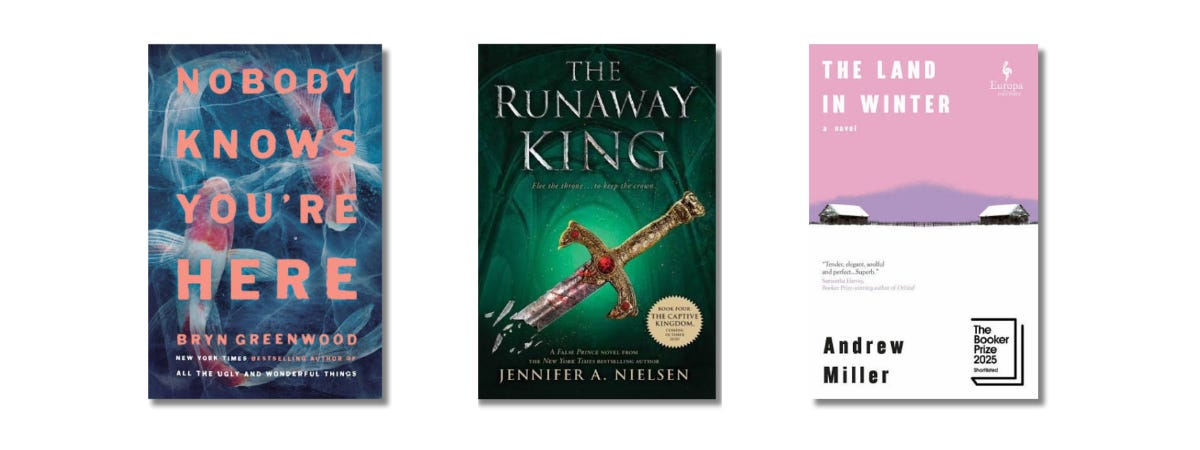
Nobody Knows You’re Here by Bryn Greenwood. Greenwood wrote the challenging and controversial All the Ugly and Wonderful Things (2016) and The Reckless Oath We Made (2019), which got far less attention and I actually preferred. I would categorize both of these books as gritty, upmarket fiction. According to Greenwood herself, her newest book, Nobody Knows You’re Here, which published in September, is a departure from her previous novels, a psychological suspense thriller. I’m not a huge thriller reader, but I liked Greenwood’s previous books enough to pick this one up. Nobody Knows You’re Here is a book about a young twenty-something woman who is jobless, struggling financially, and facing the very real possibility of homelessness, when she finds herself held in captivity, forced to act as a nanny for children kidnapped by a shadowy criminal organization. This is a book about human trafficking and I think it does a good job of showing how trafficking can take many forms, look differently than is often portrayed, and why there are layers of complexity, both individual and systemic, surrounding this serious topic. The narrative itself is… not good, in my opinion. The pacing and general dynamics were just off in a very disappointing way that did not make for a good reading experience. I did notice that while Greenwood’s previous two books were published with imprints of the “Big 5” (Macmillan and Penguin) this was published with Podium Press, a hybrid indie. All things considered I do wonder why and how Greenwood, a bestselling author, ended up at Podium and whether she had the same level of editorial support.
The Runaway King by Jennifer A. Nielsen. Book 2 in the Ascendance series, this was our most recent family read aloud. Action packed, suspenseful, full of political intrigue, perfect for the 10-14 crowd while still entertaining for readers 14+. We just started on book 3.
The Land in Winter by Andrew Miller. I can’t entirely remember what motivated me to add this Booker Prize shortlister to my TBR stack though I do recall it quietly making the “best of” rounds at the end of the year. Though as a seasonally influenced mood reader I was happy to have this book sitting in my stack while experiencing my own land in winter. A quiet, atmospheric story about everyday minutiae centering neighbors in a rural English village in the winter of 1962, a historic season of snow which left many rural villages cut off for much of the season. The couples are both youngish, newly married, and expecting their first child, though of different backgrounds and life experiences, caught between looking back at a past which has shaped their lives and the world more broadly, and a changing future yet unknown. Some books are read for plot, characters, or even theme, others are read for the writing; I think Land in Winter is a read to experience the writing kind of novel.
Listening
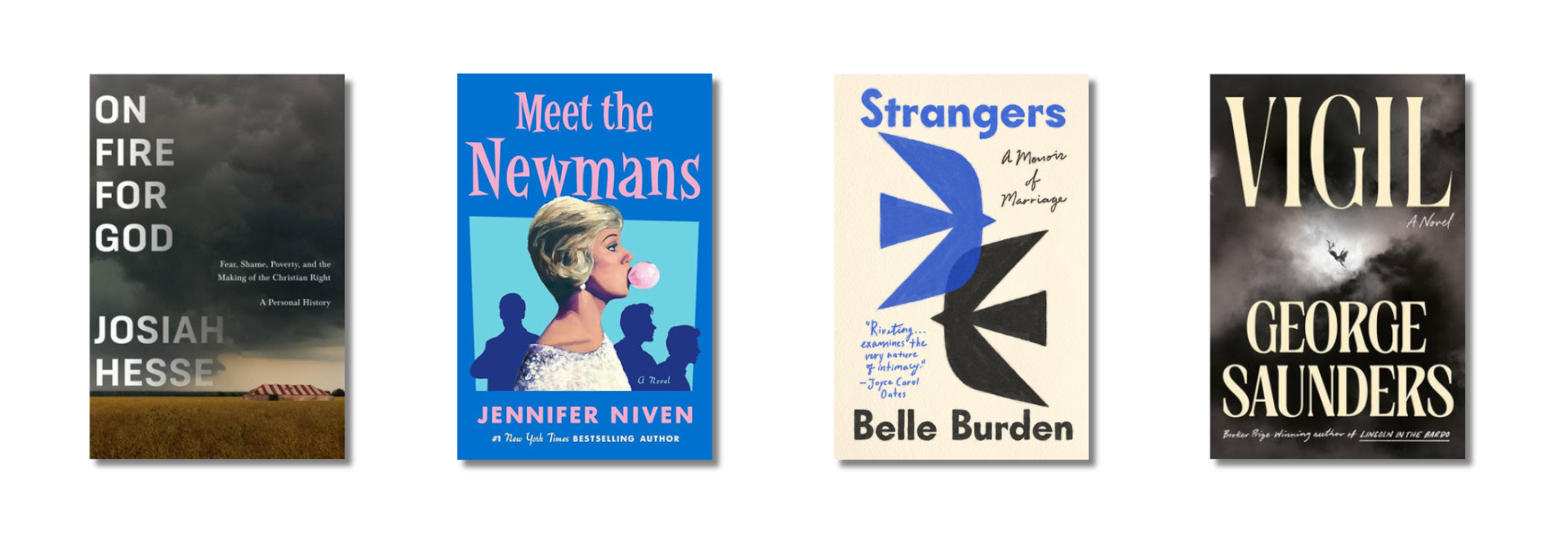
On Fire for God: Fear, Shame, Poverty, and the Making of the Christian Right - a Personal History by Josiah Hesse. An interesting, if messy, blend of memoir and sociopolitical analysis about Evangelical Christianity and the religious right and Hesse’s rather traumatic experience being raised in the church in small town Iowa.
Meet the Newmans by Jennifer Niven. One of the buzziest books of the year so far. For two decades the Newmans have held court as America’s Favorite Family starring in a primetime television show about their life—the vibe is Leave It to Beaver meets the public-private blurring of I Love Lucy—but now it’s 1964 and the times they are a changin’. Not only is the world changing around the Newmans making their squeaky clean, American as Apple Pie brand less relevant, but their family is changing as their 2 kids age into adulthood and a desire to live their own authentic lives. An ill-timed accident leaves Dinah, the matriarch typically relegated to the kitchen, suddenly needing to step into a very important role to keep the show running. I found this an entertaining and fairly thoughtful exploration of the intersection of complex family dynamics, evolving gender roles, and a changing world. It doesn’t dive deep, but it’s a fun package and excellent listen with Marin Ireland narrating.
Strangers: A Memoir of Marriage by Belle Burden. This book is making the rounds. I had no idea who Belle Burden was before reading, but I’m nothing if not compelled by a salacious memoir. Burden is a NYC socialite and Vanderbilt descendant whose life was upended in 2020, not only by COVID, but by her husband of 20 years blindsiding her by abruptly leaving their marriage and family amidst an affair. Her accounting is raw and well rendered and for all that Burden is not like us, her suffering and experience is not hemmed in by social class. A dishy memoir that believes in the power of intimate storytelling I couldn’t stop listening to.
Vigil by George Saunders. A spirit is tasked with helping an unrepentant, climate change denying, high profile oil tycoon transition from this world to the next. This has real A Christmas Carol vibes, but with the story being just as much about Marley as it is Scrooge. Some books ask questions, others answer them. Vigil is asking questions and those questions are deep existential ones about repentance, absolution, the meaning of life, selfhood, humanity, comfort, perspective, and truth. I think going into this book it’s helpful to know that in addition to being a very smart writer, Saunders is weird, thoughtful, contemplative, and also a Buddhist. The audiobook is a well produced, true full cast narration. I think this book would make for excellent discussion. After reading I enjoyed listening to The Book Riot Podcast’s discussion of the book and Ezra Klein’s discussion with George Saunders.2
Having just reread Wuthering Heights I especially enjoyed this Zero to Well-Read episode discussing the book.
Watching
Traitors, Season 3 (Peacock). Boston Rob has entered the chat so you know the game has reached a new level. Watching this show is giving me a similar feeling to watching early seasons of Survivor in that it’s incredibly interesting to watch the strategic game play evolve. I’m becoming quite concerned that we only have one season left to watch. Like, why did someone not start this show like 10 years ago? It’s just inconsiderate 🤣
Fallout, Season 2 (Prime). I love this show. It’s very weird and exactly my kind of sci-fi. I liked that we got to see more of the Fallout world in season 2.
Queer Eye, Season 10 (Netflix). Sad to see this series end and with only 5 episodes 😢
Heated Rivalry, half of Season 1 (HBO Max). 🚨 Dissenting Opinion Alert 🚨 I truly mean it when I say I regret to inform you I started watching Heated Rivalry and I don’t love it 😬 Look, I’m late to the party because sports romance isn’t my cup of tea, but I’m nothing if not open to having my tastes challenged and I was won over by the massive amounts of hype surrounding this show. While I truly do love a book adaptation is getting so much attention, especially one featuring a queer love story, I really didn’t find it compelling. It’s very horny (this is not a dig) and in my estimation there’s not enough happening outside of those steamy scenes, at least not enough to overcome my general disinterest in the typical sports romance dynamics 🤷♀️ I’ve watched half the series (4 episodes) and could walk away now, never knowing how things end, and be entirely ok—very atypical for me. I think the level of hype may have backfired in this situation, but please tell me if it is worth pressing on.
Eating & Drinking
There was a football game on Sunday. There’s a football game every Sunday for many months of the year, but this one is properly celebrated with snacks; ipso facto, this football game really is super. My husband smoked chicken wings and I made buffalo chicken dip (I don’t have a source for my recipe as it was given to me by a friend many years ago, but this one is very close), Baked Ham and Cheese Sliders, and Fried Dill Pickle Dip—this is very good with all sorts of things dipped in it, but we especially liked pretzel thins, carrots, and bell peppers. We were surprised to find the breadcrumbs are fun, but really not needed at all.
This Instant Pot Sweet Potato Tortilla Soup comes together very quickly. I like to add a can of drained, rinsed black beans and a cup of frozen corn at the end. I never make the suggested tortilla strips, but I’m sure they would be very tasty and could be completed in the time the soup cooks, we just crush up some tortilla chips.
Ground Beef Stroganoff, also from the Instant Pot, with steamed broccoli on the side.
Red Velvet Cheesecake Brownies for a Valentine’s Day Treat
Links + Loves
Though I enjoyed much of my assigned reading in school (I have, and will forever remain, a book nerd) I did have a particular egregious encounter with Moby-Dick in 10th grade Advanced English. For this reason I’m able to sympathize with the plight of readers who have been harmed by their student reading experiences. Still, I can’t help but be fascinated by and agree with The Marathon Moby-Dick Reading Is a Radical Act. (The Atlantic) In fact, I think the argument can be made a non-marathon reading of Moby-Dick is a radical, or at least counter-cultural, act at this point in time. And yes, I’m aware this is a title I will have to revisit at some point in my reading life; alas, I am not yet prepared to face this reality. Moby-Dick is my Moby Dick.
The general consensus in Reader circles seems to be there was no “Book of the Year” in 2025. I don’t know whether I’m qualified to crown anything or anyone (though perhaps I should be) but I think if there were a book of 2025, Virginia Evans’ The Correspondent should seriously be considered. The Correspondent is a debut novel which first published in April 2025 with little fanfare and seemingly mostly thanks to word-of-mouth and indie bookseller hand-selling made it to the New York Times Bestseller list in September, climbing to the number 1 spot in December when the book was sold out everywhere. We love to see a book taking on a life of its own, climbing the charts and TBRs everywhere on its own merit. The Correspondent is the kind of book everyone seems to enjoy, a title I would feel comfortable recommending to a wide range of readers; if that’s not a book of the year I don’t know what is. Not only is it delightfully bookish, I think it resonates in this particular moment for particular reasons. This Slate piece digs into why The Correspondent Is an Epistolary Novel for the Social Media Age.
This week in Wuthering Heights news:
Sales of Brontë’s Wuthering Heights skyrocket ahead of film adaptation (The Guardian)
Vogue argues The Best Wuthering Heights Adaptations Are All About Creative Ways to Haunt Your Ex
And while I generally agree the internet is indeed rotting our brains, I think Glamour's No, Wuthering Heights Is Not a Hard Book to Read is actually a terrible take. Wuthering Heights is more easily readable on the page than many other classics, including, let’s just say for the sake of argument, Moby-Dick, it’s notoriously misunderstood because it’s actually quite complex and layered. Part of why WH is such an enduring classic is it begs to be read through different lenses and is ripe for interpretation. So, no, it’s not a hard book to read, but it can be a challenging story to fully unlock.
Ohio is… Ohio, but we did birth Toni Morrison and we are using America’s 250th birthday as inspiration for a year long celebration of Morrison and her contribution to American literature beginning on February 18th, her birthday and Toni Morrison Day in Ohio, with a live-streamed conversation between writers Namwali Serpell and Hanif Abdurraqib, inspired by Serpell’s new book “On Morrison.” If you’re in or near Ohio there are in-person events happening all around the state, but people everywhere can participate in the monthly virtual book club which will be reading all 11 of Morrison’s novels in the order they are set beginning with A Mercy in March.
‘Hamnet’ Producer Liza Marshall Secures Rights to Author Maggie O’Farrell’s Next Novel ‘Land’ (Variety) Land is set to publish this June.
The Future of Books We Absolutely Do Not Want is Already Here. (Book Riot)
Best Romance Books of the Century So Far according to Book Riot.
The inaugural James Patterson and Bookshop.org Prize longlist has been announced. This is a new literary prize celebrating debut authors nominated and selected by independent booksellers. Finalists to be announced March 16th. (Bookshop.org)
What are you reading, listening to, eating, watching, liking, and/or linking this week? Let’s chat!
That Bookish Life is a weekly newsletter publishing on Saturdays. If you enjoy my rambles please consider subscribing, sharing, liking, or recommending to a friend.
I sometimes share affiliate links. If you make a purchase I may earn a small commission at no cost to you. Thank you for supporting my work in this way.
If you’d like to keep up with me between newsletters I’m on IG @that_bookish_life. You can also find me on Goodreads and Storygraph.
Until next time!
https://www.businessinsider.com/meta-reveals-decline-friend-content-instagram-facebook-amid-ftc-trial-2025-4
While Book Riot’s episode avoids spoilers I think it’s best appreciated after reading, while the Ezra Klein interview could be enjoyed before or after reading.
I knew it had to be low but 7% on IG is even lower than I would’ve guessed! The desire to balance being informed and not inundated with “news” has been increasingly challenging the last couple years — Acknowledging we can’t be an expert on every issue helps, or has helped me at least. I do still enjoy posting and reading book reviews, but limit my time scrolling - the bombardment of ads has helped curb that in the past year!
I love this so much! As my digital detox Sherpa, thank you for your service and leading the way.
For news, I also love Tangle daily and I subscribe to a daily newsletter from two media orgs in NZ and Australia. Otherwise, I use the Guardian and ABC (Aus) apps. I'm finding it a lot more manageable and like I'm able to consider what I've read rather than spiral into existential despair.
Have you listened to the podcast Vibe Check? They cover current events and pop culture from a Black queer lens.
I'm sorry you didn't love Heated Rivalry! I do think the last few eps are stronger but understand if you wouldn't want to dip back in.
Currently have Strangers in my bag so glad to hear you enjoyed it! It's been a minute since I got into a juicy memoir so am looking forward to it 🙌🏻